Press Release
Young Leaders Seminar Promotes National Culture of Integrity
Posted by Media Team 29 September 2026
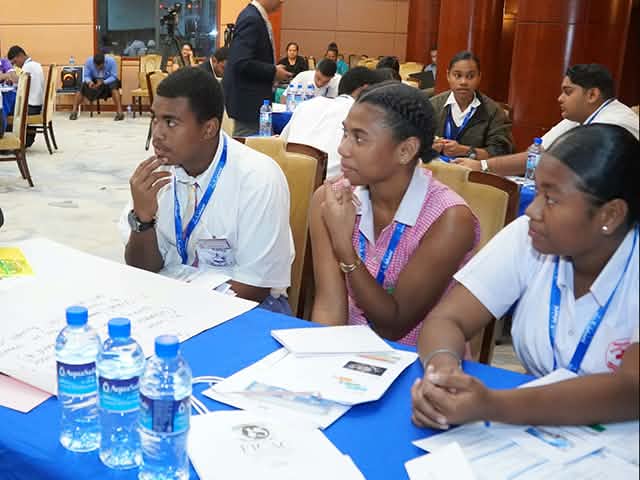
The Fiji Independent Commission Against Corruption (FICAC) held its 2026 Young Leaders’ Seminar at the Civic Centre in Suva, bringing together student leaders from 20 secondary schools across the Central Division.
The one-day seminar, themed “Empowering Young Leaders: Catalysts for a National Culture of Integrity,” was officially opened by FICAC Manager Operations and Quality Assurance, Mr Mosese Matanisiga, on behalf of the Acting Commissioner, Ms Lavi Rokoika.
In his opening address, Mr Matanisiga congratulated the head boys and head girls on the trust placed in them by their respective schools, reminding them that leadership comes with responsibility and the opportunity to set a positive example.
He emphasised that building a national culture of integrity begins with everyday choices, including being honest, treating others fairly, accepting responsibility for mistakes and using leadership positions to support others rather than personal interests.
Mr Matanisiga encouraged student leaders to stand firm against peer pressure, bullying, harmful online behaviour and other unethical practices. He also urged them to seek guidance from teachers, counsellors, parents or other trusted adults when faced with difficult situations.
Participants also benefited from presentations by Fiji Police Force Director Community Policing, Senior Superintendent of Police (SSP) Rakesh Chand, on “Resisting Drugs and Peer Pressure Through Integrity.”
The Online Safety Commission’s Mr Samuela Finau and Mr Tevita Talemaitoga also delivered a presentation on “Digital Age Challenges: Leading with Integrity Online,” highlighting the importance of responsible online behaviour and ethical decision-making in the digital age.
The seminar aimed to raise awareness of the impact of drug abuse, digital misuse and unethical practices while equipping young people with practical skills for ethical leadership. It also sought to strengthen collaboration between student leaders, mentors and institutions, encouraging integrity-based initiatives in schools and communities.
Mr Matanisiga challenged participants to leave the seminar with at least one practical commitment they could implement in their schools, such as standing against harmful rumours, listening to students whose voices are seldom heard or applying school rules fairly.
He reminded the students that their actions, rather than their titles, would ultimately demonstrate the values they represented as leaders.
The seminar reinforces FICAC’s commitment to promoting integrity, accountability and ethical responsibility among young people, in particular, our student leaders.
